
The thyroid health test service naturally offers comprehensive assessments for thyroid function, crucial for overall well-being as it impacts metabolism and various bodily processes. Key benefits include early detection of issues, personalized hormone balance insights, and guidance on lifestyle adjustments. "Normal" TSH ranges (0.4–4.0 mIU/L) vary globally due to demographic and methodological factors; regular monitoring is vital for high-risk groups. Optimal thyroid health, influenced by age, sex, location, and overall health, ensures efficient metabolism, improved energy levels, mood regulation, and enhanced well-being.
The thyroid gland, often referred to as the body’s metabolic regulator, plays a pivotal role in maintaining overall health and well-being. Understanding what constitutes normal thyroid levels is paramount for gauging our gland’s efficiency. However, interpreting thyroid health test results can be perplexing for many. This article aims to demystify thyroid function, offering a comprehensive guide to what a normal thyroid level should resemble. By providing clear insights, we empower individuals to take charge of their thyroid health and utilize thyroid health test services effectively, ensuring optimal glandular performance.
- Understanding Thyroid Hormones: T3, T4, and TSH
- Normal Thyroid Function Ranges: What to Expect
- Factors Affecting Thyroid Health Test Results
- Interpreting Your Thyroid Blood Tests: Key Metrics
- Maintaining Optimal Thyroid Health Through Lifestyle
Understanding Thyroid Hormones: T3, T4, and TSH

Thyroid hormones, T3 (triiodothyronine) and T4 (thyroxine), play a pivotal role in regulating metabolism and energy production within our bodies. These hormones are crucial for maintaining optimal health, influencing everything from heart rate and digestion to bone density and reproductive function. The thyroid gland, located at the base of the neck, secretes these hormones into the bloodstream, where they travel to virtually every cell in the body, signaling them to work more efficiently.
The body’s primary way to control thyroid hormone levels is through a feedback mechanism involving the pituitary gland and hypothalamus. The pituitary gland releases TSH (thyroid-stimulating hormone), which stimulates the thyroid to produce and release T3 and T4. In response, the thyroid sends feedback to the pituitary, adjusting TSH levels to maintain hormonal balance. This intricate system ensures that our bodies function at their best. For instance, during periods of increased physical activity or stress, the body may increase TSH production to boost metabolism and meet heightened energy demands.
Understanding these dynamics is essential when interpreting thyroid health test results. A comprehensive thyroid health test service naturally encompasses measurements of T3, T4, and TSH levels in the blood. For example, a liver blood test in Southampton or a kidney blood test in Manchester might include these parameters to assess overall metabolic function. Even a female fertility blood test in Portsmouth can provide valuable insights into thyroid health, as hormone imbalances can impact reproductive capabilities. Optimal T3 and T4 levels typically fall within specific ranges, with TSH acting as a crucial indicator of thyroid function. Deviation from these norms may suggest underlying issues that require medical attention. Regular monitoring and consultation with healthcare professionals are vital to maintaining healthy thyroid levels and overall well-being.
Normal Thyroid Function Ranges: What to Expect

Factors Affecting Thyroid Health Test Results

Thyroid health test results can vary greatly depending on several factors, making it crucial to interpret them within a broader context. A normal thyroid level, as determined by a thyroid health test service, typically refers to a TSH (thyroid-stimulating hormone) value between 0.4 and 4.0 mIU/L. However, this range can be influenced by age, sex, overall health, and even geographical location. For instance, a study comparing thyroid function in different populations found varying normal ranges globally, highlighting the importance of locale-specific reference intervals.
In the UK, a thyroid blood test in Southampton or Nottingham might yield slightly different results due to variations in laboratory methods and patient demographics. Additionally, factors like vitamin D blood test readings can indirectly impact thyroid health. Sufficient vitamin D levels are essential for optimal thyroid function, as it plays a role in regulating TSH production. A full blood count (FBC) in Nottingham, which assesses various blood components, may also provide clues about underlying health issues that could affect thyroid performance. For example, anemia or inflammatory conditions can influence thyroid hormone production and circulation.
When interpreting thyroid test results, healthcare professionals consider these contextual factors to ensure accurate assessments. It’s important for individuals to discuss their unique circumstances with their doctors, as personal health histories and lifestyle choices can significantly impact thyroid health. Regular monitoring, especially in high-risk groups, helps maintain optimal thyroid function, ensuring overall well-being.
Interpreting Your Thyroid Blood Tests: Key Metrics

Thyroid health is integral to overall well-being, and understanding your thyroid blood test results is a crucial step in maintaining optimal hormone balance. When interpreting these tests, several key metrics stand out. One primary indicator is thyroxine (T4) and triiodothyronine (T3) levels. These hormones play a pivotal role in regulating metabolism, influencing everything from energy levels to body temperature. A normal T4 range typically falls between 80-180 nanograms per decimal liter (ng/dL), while T3 levels usually measure between 50-200 pg/mL.
Another essential metric is thyroglobulin (TG), a protein produced by the thyroid gland that carries both T4 and T3 hormones. Normal TG levels generally vary from 1-40 micrograms per milliliter (μg/mL). A comprehensive thyroid health test service will often include these core measures, offering insights into the function of your thyroid gland. For instance, if T4 or T3 levels fall outside the reference range, it could indicate hypothyroidism or hyperthyroidism, respectively.
Complementary tests like a full blood count (FBC) in Southampton or vitamin B12 blood tests in Coventry can also provide valuable context. An FBC can reveal red blood cell counts and hemoglobin levels, which are influenced by thyroid hormones. Vitamin B12 status is another crucial aspect, as deficiency can impact energy production and overall well-being, potentially linked to thyroid dysfunction. Regular monitoring of these key metrics allows for early detection of thyroid imbalances, enabling timely intervention and management through dietary adjustments, such as eliminating dairy intolerance in Derby, or targeted supplements.
Maintaining Optimal Thyroid Health Through Lifestyle
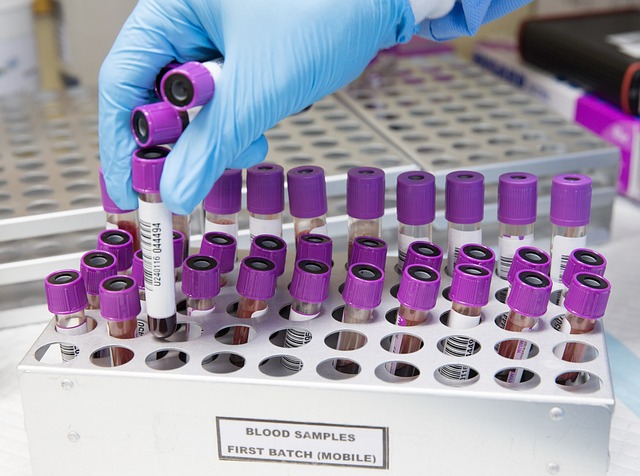
Maintaining optimal thyroid health is crucial for overall well-being, and understanding what constitutes a “normal” thyroid level is an essential first step. A thyroid health test service can provide valuable insights into this often-overlooked aspect of our physiology. The thyroid gland, located at the base of the neck, plays a pivotal role in regulating metabolism by producing hormones that influence nearly every cell in our bodies.
Normal thyroid function typically manifests as a serum TSH (Thyroid Stimulating Hormone) level between 0.4 and 4.0 mIU/L, as measured through a full blood count Bristol (FBC). This range indicates that the thyroid is functioning efficiently, neither overactive nor underactive. For example, during menopause, hormone fluctuations can impact thyroid health; a female hormone blood test Portsmouth may reveal elevated TSH levels, signaling hypothyroidism or an underactive thyroid. Conversely, some individuals may exhibit low TSH levels, suggesting hyperthyroidism, or an overactive thyroid—a condition more commonly diagnosed in women than men.
Lifestyle plays a significant role in supporting thyroid health. Balanced nutrition, rich in iodine and zinc-rich foods, is vital for thyroid hormone production. Regular exercise not only promotes overall fitness but also helps regulate thyroid function. Stress management is another critical factor; chronic stress can disrupt the delicate balance of thyroid hormones. Additionally, adequate sleep is essential; research shows that even mild sleep deprivation can negatively impact TSH levels and thyroid function over time. Regular monitoring through appropriate blood tests—like those offered at healthcare facilities in Bristol or Portsmouth—can help individuals make informed decisions to maintain a healthy thyroid, ensuring optimal energy levels, mood regulation, and overall well-being.
By understanding thyroid hormones T3, T4, and TSH, recognizing normal function ranges, and being aware of factors influencing test results, you gain crucial insights for maintaining optimal thyroid health. Key takeaways include the importance of regular monitoring through a comprehensive thyroid health test service, lifestyle adjustments such as stress management and balanced nutrition, and interpreting test metrics like TSH, T3, and T4 within individual contexts. This article empowers individuals to take charge of their thyroid health by providing practical knowledge and actionable steps, ensuring readers emerge with a clearer understanding and enhanced well-being.